2026 Advancing Disarmament in a New Age of Insecurity Workshop - Vienna, Austria
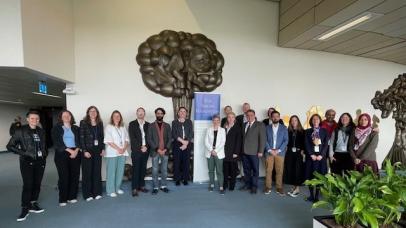
The second Advancing Disarmament in a New Age of Insecurity workshop was held in Vienna, Austria on September 21 and 22, 2026. The Workshop was co-convened by The Simons Foundation Canada, and the Simons Chair in Disarmament Global and Human Security at the University of British Columbia and the Simons Chair in Peace, Disarmament and Human Security at Simon Fraser University, in association with the United Nations Office for Disarmament Affairs.
The event brough together scholars and activists from many countries to discuss the growing dangers of militarization and increased risk of nuclear weapons use and explore ways to promote active disarmament and strategies for peace as a response. It focused on the role of higher education institutions in advancing disarmament education and exploring effective ways to advocate for change.
Context of the Vienna Workshop
The world has become significantly more dangerous in recent years. Armed conflicts have escalated globally, military spending has reached record levels, and governments around the world are investing heavily in new weapons systems and military technologies. At the same time, the institutions and agreements that once constrained nuclear competition continue to erode. The New START Treaty—the last remaining treaty limiting deployed strategic nuclear weapons in the United States and Russia—expired in 2026, and no replacement is currently in sight. All nuclear-armed states are modernizing their arsenals, and political leaders increasingly invoke nuclear weapons as symbols of national pride and power and instruments of “deterrence” and coercion.
These developments are unfolding alongside increased militarization in international politics. NATO has expanded its membership, while insisting on members dedicating a greater portion of their national budget to military spending. Many states, as mentioned earlier, have increased defence spending to record levels, but what is notable is their framing of military investment as the primary response to insecurity and geopolitical uncertainty. Defying research suggesting otherwise, national leaders also promote military spending as being economically beneficial.
Across diverse political contexts, there is growing acceptance of the idea that security is best achieved through stronger armed forces, expanded weapons procurement, and military preparedness. “Deterrence”—or the assumption that simply acquiring new weapons, nuclear or non-nuclear, will increase security and prevent attacks on one’s territory—is being used as though it is a diplomatic strategy and embraced with an alarming lack of critical reflection. This trend has contributed to narrowing public debate about alternative approaches to security and has reinforced the assumption that resources devoted to militarization should take precedence over investments in social programs, climate resilience, public health, education, and other forms of human security.
Together, these developments have contributed to what many observers regard as the most dangerous nuclear environment since the Cold War. The Bulletin of the Atomic Scientists has repeatedly warned that humanity faces unprecedented levels of risk, reflected in the Doomsday Clock inching closer to midnight. Unlike some earlier periods of concern about nuclear weapons, where the risks were primarily from accidents or miscalculation, today there are explicit threats of use of nuclear weapons to achieve political goals.
At the same time, new technological developments are reshaping both nuclear politics and public discourse. Artificial intelligence is increasingly integrated into military planning, targeting systems, intelligence analysis, and command-and-control structures. Governments and private corporations are investing heavily in AI-enabled military capabilities, raising concerns about escalation, transparency, accountability, and the future of human control over the use of force. Moreover, nuclear power and investments in nuclear technologies are being presented as a solution to the technological problem of the seemingly endless need for power for AI data centres. Because of the inextricable connections between nuclear energy and nuclear weapons, any expansion of nuclear energy also has negative implications for security.
Against this backdrop, it is worth noting that most educational institutions have few or no course offerings on disarmament, peace studies, and critical approaches to security, even though disarmament education is clearly more important than ever. Educational initiatives focused on disarmament remain under-resourced and fragmented. Public awareness of the dangers of nuclear weapons and militarization remains low, especially among younger generations. Renewed efforts are needed to strengthen disarmament education, connect educators and advocates across regions and disciplines, and develop innovative approaches for engaging new audiences. It is particularly important that young people gain more knowledge and awareness of the dangers inherent in nuclear weapons and excessive militarization as they begin their adult careers.
The Vienna workshop built on an earlier Advancing Disarmament in a New Age of Insecurity workshop held in Vancouver in April 2025. The workshop was intended to develop an international network of educators in nuclear disarmament and brought together academics, educators, activists, international organizations, and civil society leaders from around the world to explore how disarmament education can be strengthened in an increasingly volatile global context. Participants discussed many of the problems and dangers identified earlier in this document and emphasized the need to move beyond awareness of these dangers toward education that equips learners with the knowledge, tools, and pathways needed to advance disarmament and non-proliferation efforts.
Five interconnected themes emerged across the workshop. First, participants highlighted the importance of rigorous and accessible disarmament education, including stronger engagement with students, educators, and universities. Second, discussions focused on declining public engagement with disarmament issues and the need for new narratives, storytelling approaches, and communication strategies that connect nuclear risks to everyday concerns and human security. Third, participants emphasized the importance of better understanding and communicating the humanitarian impacts of nuclear weapons, including through lived experiences, arts-based approaches, and attention to gendered and marginalized perspectives.
The workshop also underscored the importance of building stronger networks, coalitions, and partnerships across disarmament, peace, justice, environmental, and educational movements. Participants identified collaboration as essential for expanding the reach and impact of disarmament education at a time of shrinking resources and increasing militarization. Finally, discussions explored the economic and social opportunity costs of militarization, including how educators and advocates can make defence spending and security choices more tangible and understandable to the public. A strong consensus emerged that the workshop should serve as the beginning of an ongoing international community of practice dedicated to advancing nuclear disarmament education through collaboration, curriculum development, resource sharing, and collective action.
See the Workshop Concept Paper and Agenda for more information.
For information on the inaugural event see: 2025 Advancing Disarmament in a New Age of Insecurity Workshop - Vancouver, Canada